What to Pack for Every Trip: The Essential Checklist
Packing well means bringing what you will actually use and leaving the rest at home. What you need depends on where you are going, the season and how long you will be away. A beach trip calls for sun protection and light clothes, a city break for comfortable walking shoes and one smarter outfit, and a long journey for careful weight and space planning.
This checklist covers the items almost every trip needs. It follows one simple order: first what you cannot replace on the road, then what you use every day, then what is nice to have.
1. Documents and money
These items are the hardest to replace, so pack them first and keep them in your carry-on.
- Passport: Check its expiry date before you book. Some countries require at least six months of validity beyond the dates of your trip, and some airlines will not let you board if you do not meet that rule. The destination country sets the requirement, so check it for each trip (U.S. Department of State).
- ID, visa or entry authorization if your destination requires one.
- Booking confirmations for flights, hotels and tours, plus your travel insurance details.
- Payment cards: Bring more than one and store them in different places, with a small amount of local cash for places that do not take cards.
- Copies: Keep a digital copy of your documents that you can open offline, and a paper copy packed separately from the originals.
- Hotel details: Save the name and address of your accommodation on your phone, ideally in the local language, to show a taxi driver.
If your phone battery dies, a printed booking confirmation can save you a lot of trouble.
2. Clothing
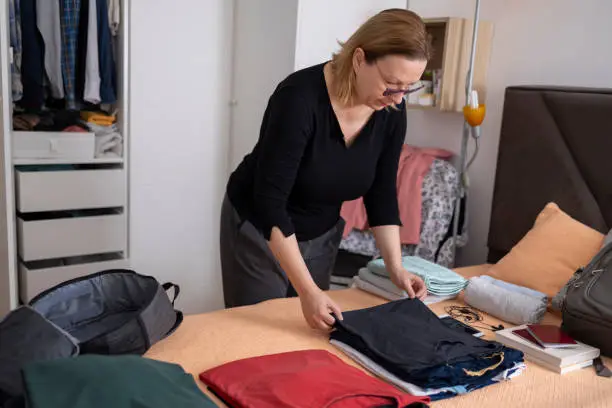
Pack for about one week, then plan to wash or re-wear. Choose pieces that mix and match in two or three neutral colors, so a few items make many outfits. Layers work better than bulky clothes: a thin layer under a light jacket adapts to changing weather and takes less space than one heavy coat.
| Trip type | What to prioritize |
|---|---|
| Beach or hot weather | Light, breathable clothes, swimwear, a hat, sunglasses, sun protection |
| City break | Comfortable walking shoes, one smarter outfit, a light jacket or scarf |
| Cold weather or mountains | Thermal base layer, warm middle layer, waterproof outer layer, warm socks |
| Long trip | Fewer items, quick-drying fabrics, a plan to do laundry once |
Pack enough underwear and socks for the first week, plus sleepwear. If your trip is longer than that, a laundry stop is lighter than carrying extra clothes.
3. Shoes and toiletries
Shoes are bulky and heavy, so choose them for your itinerary and keep them to two or three pairs.
- Bring comfortable shoes you have already worn. A long trip is a bad time to break in new ones.
- Wear the heaviest pair on the travel day instead of packing it.
- Add a lighter pair for evenings and sandals for the beach or hot days only if your plans need them.
- Put each pair in a bag so dirt stays away from your clothes, and use the space inside the shoes for socks and other soft items.
Toiletries stay organized in one small wash bag that you can reach quickly. Bring only what you use every day, in small refillable containers, and check what your accommodation already provides, such as a hair dryer or soap.
For carry-on bags, the TSA liquids rule applies: each liquid, gel, aerosol, cream or paste must be 3.4 ounces (100 ml) or less, packed in a single quart-size, clear zip-top bag, with one bag per passenger (TSA). Larger containers belong in checked luggage. Solid versions, such as a shampoo bar or bar soap, save space and avoid spills.
A small sunscreen is worth packing for almost any destination. Close every bottle tightly and keep liquids in a separate pouch in case one leaks.
4. Tech and power banks
Your phone usually holds your maps, tickets, hotel details and translations, so its charger matters as much as the phone. Keep all small electronics together in one pouch so cables do not get lost.
- Phone and charger, plus a spare cable
- Power bank, charged before you leave
- Headphones
- Plug adapter that matches the outlets in your destination
- Offline maps and downloaded tickets or boarding passes
Keep the charger and adapter where you can reach them quickly, for example while waiting at an airport.
Power banks have airline rules. According to the FAA, spare lithium batteries and power banks must travel in your carry-on bag, not in checked baggage. Batteries up to 100 Wh need no airline approval, while batteries from 101 to 160 Wh require airline approval and are limited to two spares per person. Protect the terminals from short circuits with tape or a case, and check your airline, since some set stricter limits (FAA PackSafe). The watt-hour rating is printed on most power banks.
5. Health kit, water and snacks
A small health kit handles minor problems without a search for a pharmacy. It should stay compact: adhesive bandages, wipes, hand sanitizer and any basic items you use regularly.
- Daily medication: Bring enough for the whole trip plus a few extra days in case of delays. Keep it in the original packaging and carry it in your hand luggage, together with any prescription papers you may need.
- Rules abroad: Some medicines are restricted in some countries, so check the destination’s rules before you travel.
- Water bottle: A light, leak-proof bottle you can refill reduces how often you buy bottled water. Empty it before airport security and refill it afterwards.
- Snacks: Dry, non-messy snacks such as nuts or bars help during long rides and waits. Avoid food that melts or leaks, and check local rules if you will cross a border with food.
6. How to organize and protect your bag
A good layout saves time at every stop. Put what you need first near the top, what you need later at the bottom, and group similar items in small pouches or packing cubes.
| Bag area | What to keep there |
|---|---|
| Personal item or easy-reach pocket | Passport, phone, wallet, essential medication, charger |
| Top of the main bag | Items you need on arrival, such as a light jacket and your wash bag |
| Main compartment | Clothes, rolled or in packing cubes |
| Shoe space | Shoes, with socks and small items inside |
| Pouches | Tech items and the health kit |
Leave some free space. It helps if you buy gifts, and a bag that is not overstuffed closes more easily on the way back.
Things you can usually skip: extra pairs of shoes, too many outfits, large bottles of toiletries, heavy books, spare gadgets and anything your accommodation provides.
Keep your bag secure.
- Do not keep all your valuables in one pocket or one bag. If one is lost, you still have the rest.
- When flying, put your essentials in your carry-on: passport, phone, cash, documents and key medication. If your checked bag is delayed, you can still manage.
- Attach a name tag with limited details, such as your name and phone number, not your full home address.
- In crowded places, keep your bag in front of you or close to your body.
7. Final checklist before you leave
Take five minutes for a last check. It prevents most small problems.
- Passport and ID, with valid dates
- Booking confirmations and travel insurance details
- Cards and some local cash
- Phone, charger, power bank and plug adapter
- Essential medication and health kit
- Wash bag (liquids within the carry-on limit)
- Clothes and shoes suited to the weather and plans
- Water bottle (empty) and a few dry snacks
- Name tag on your bag and a free corner of space
Before you close the door, look around the room one more time for anything left behind.
Frequently asked questions
What are the must-bring items for most trips? Your documents, money and cards, essential medication, a phone with its charger, weather-appropriate clothes and comfortable shoes.
How do I pack light? Choose clothes that mix and match in a few colors, wear your heaviest shoes on the travel day, and use small containers for toiletries. Pack for about a week and plan to wash clothes on longer trips.
How many pairs of shoes should I take? Two or three at most: one comfortable pair for walking, one lighter pair for evenings and sandals only if your plans include beaches or hot weather.
Can I put a power bank in my checked bag? No. The FAA requires spare lithium batteries and power banks to travel in carry-on baggage. Check your airline’s rules for batteries above 100 Wh.
How big can my liquids be in a carry-on? Each container can hold 3.4 ounces (100 ml) or less, and all of them must fit in one quart-size clear zip-top bag per passenger, according to the TSA.
How early should I check my passport? Before you book. Some countries require at least six months of validity beyond your trip dates, and renewing a passport takes time.
Should I leave space in my bag? Yes. Free space makes it easier to bring home gifts and to close the bag again.
What should I check right before leaving home? Documents, money, phone, charger, medication, wash bag, weather items and the weight of your bag.
Sources and last review
Rules for travel change, so confirm them with the official pages below and with your airline before you fly.
- TSA travel tips: liquids, aerosols and gels
- FAA PackSafe: lithium batteries
- U.S. Department of State: passport FAQs, including validity requirements
Last reviewed: November 22, 2026. Written by the Zawalela Editorial Team.